This Sermon is prepared by

Rev.Fr.Peter Jayakanthan sss
Congregation of the Blessed Sacrament
Corpus Christi Catholic Church,
Houston, Texas, US
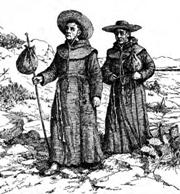
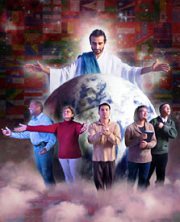



1st Sunday of Lent YearMy Desert days…..Gen9:8-15, 1Pet3:18-22 Mk1:12-15Dear Sisters, Brothers and Children, we have begun our journey of forty days in this season of Lent. It is an opportunity offered to us to review, reflect and renew our life. This process is a journey. The Church offers different pious practices, penance suggestions and spiritual support for this journey. The Sunday readings of this season provide deep the symbolic images for our journey of mountain, cross, desert, flood and forty days, among others. This journey needs our willingness, and repentance. We shall examine and enter into our desert days as a retreat with Jesus for His mission. Our participation in this Eucharistic celebration may open our minds and thoughts to journey through this season of grace.What are the desert days we go through? Which are our desert experiences? I was away from my family contact due to my selfish reasons those were my desert days… My days of misunderstanding with my parents due to my prejudice were the desert days…. Stopped talking to my sister for ten years due to differences were the desert days….. Stopped going to Church for several years due to spiritual distress were desert days…. Doubted my friends and my own ability were the desert days…. Moments I failed to say no to some bad habits and destructive path were desert days… Opting, choosing and preferring to spend more hours with media as God were desert days…. We presume that these desert days are the moments where we face the devil or Satan. We also think that those are moments of struggle, as in our constant prayer, “lead us not into temptation but deliver us from evil.” Desert days are part of our life journey. We need to pass through such situations. We need to cross-over and pass-over these experiences of wrestling. The readings on this first Sunday of the season of Lent invite us to examine those struggles of our life. The question we need to ask ourselves is, “will we stay and get struck with the struggle, or will we pass-on and move-on from there?” All three Synoptic Gospels offer the Temptation of Jesus; others explain in detail about the three struggles of Jesus. But all three Evangelists, Matthew, Luke and Mark, wanted to express the desert days of Jesus. His desert days are the moments of struggle against the expectations of the people. The internal struggle was either to use His divine power for personal comfort to avoid suffering and death, or to say firmly yes to the plan of the Father. The option, decision and willingness of Jesus to be The Suffering Messiah and Suffering Servant were clear throughout His life. But the struggle existed not only these forty days but continued even on the cross. But these forty days were the initial depth experience of dying to human desires of flesh, power and prestige. So the desert experiences are the moments of wrestling between good and evil, between God’s ways and my ways. The absence of God is the presence of evil. The absence of goodness is the presence of my pride and greatness. Every struggle and desert days are the invitation to acknowledge the greatness, blessings and goodness of the Lord. It is the time to prove that my God, faith and goodness are stronger than the choices and desires of the devil. Desert days are the dry days, the days of my brokenness, and days of vulnerable reality; but we are called to recognize the well in the desert. As the angel ministered to Jesus, the well-spring is the grace of the Lord. Why did Jesus go through this desert experience of struggle and temptation? The Church Fathers answer, giving a few thoughts, which Jesus wanted to set a model and example as He foresaw the struggle we would go through. i) We are stronger than the Satan, ii) Avoid becoming proud with God given gifts, iii) To prove to Satan that we rejected him and Surrendered to God alone, iv) desert days and temptations may make us stronger and v) we may realize the preciousness of the grace of God. The prayer “lead us not into temptation but deliver us from evil” is not effective because we don’t move on from those desert days. In Hebrew Scripture, Satan is considered as an adversary, as an opponent, enemy, and a rival. In Greek, the devil was called as diablos, which means slanderer. It attacks people to be against God. It disturbs and pulls people away from the ways of God. In Christian Scriptures, and during Jesus’ time, it is portrayed as an evil spirit. People were possessed with evil spirit. The evil spirit, or Satan, entered into Judas, who seduced Judas (Luke 22:3). The Philistines called David “a Satan” (1 Samuel 29:4); David regarded Abishai as his Satan (2 Samuel 19:23); Solomon praised God that he had no Satan left to oppose him (1 Kings 5:4). Gradually, Satan was used to describe someone who prosecutes a case against another, as in Job 1:6-7, or someone who accuses others before God, as in Job 2:2 and Zechariah 3:2. The evil spirit was confronted by the words and works of Jesus (Luke 10:1-19); against whom we must fight (1 Peter 5:8, 9; James 4:7); who is the power against God and is destined for the final destruction (Matthew 25:41). This personification of evil was considered as the essence of everything that is against God and the source of all conflict. There are many examples from the Old Testament, where the Prophets and God’s People went into the darkness of struggle, traveling into the desert journey, to confront evil. Ex24:18 Moses spent forty days and nights of desert moments in the mountain of the Lord, carrying doubts and questions. Ex16:35 The People of Israel struggled through the desert wilderness for forty years, with bitterness, lamentation and hunger. 1Kg19:8 The Prophet Elijah walked alone in the wilderness for forty days and nights with a heavy and confused heart. 1Sam17:16 Goliath was threatened for forty days and nights by The Philistine, and then the People of Israel and David cross-over this wilderness of fear towards courage. What are some of the desert experiences I have experienced in my life? What desert experience am I living through right now? Shall we move on from our deserts of sinfulness, doubts, selfishness, jealousy, efficiency, isolation and despair? All these attractive ones may look big, but we called to see God and His huge grace, and see the desert struggle as small one. Some of the things that appear attractive in life are dangerous to our soul, shadowing the love God wants to share with us. Other things that seem insurmountable to overcome, this is where we are called to see that God’s grace is huge, and then the desert struggle becomes small. We ask ourselves, what does God want me to do….how am I to live my life? The Lord is with us in the midst of our struggles, our desert experiences, and comes to enliven our faith, making it more deeply rooted in faith, hope and charity. “A boy, age 7, said, "If God is everywhere and we don’t see him, we are looking through him all the time." Prayer leads us into and through the desert moments, sinking our hearts into the heart of God who asks only that we love Him and serve Him with all our hearts, and allowing us to know Him in a way that surpasses understanding. In the first reading, Noah was protected in the midst of the struggle as he was obedient to the Lord. He recognized and found the hand of the Lord to be huge in front of the deadly flood. Out of this great storm, God used the rainbow as a sign of affirmation and hope for Noah, a sign of His covenantal love for humanity. When we are in the midst of the storm or walking in the desert, God will send us a sign of His love for us. We are also called to recognize these rainbows in the midst of our desert journey. Eucharist is the experience of Noah’s Ark, strengthening us in goodness, refocusing our faith upon God Who gives us life, and the courage to say ‘yes’ to God to persevere in the daily journey, where we will find the rainbows, the signs of God’s love—Amen. 
|